Beny More
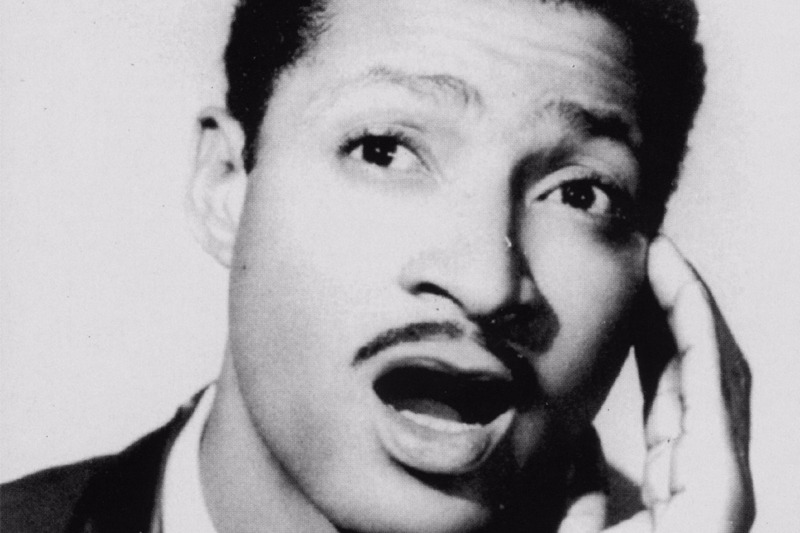
Beny Moré is the greatest singer of popular music Cuba has ever produced. Think Frank Sinatra or Nat King Cole and you'll get an idea of how he's perceived in Cuba, and how he should be regarded elsewhere. In the nearly half century since his death, no Cuban vocalist has emerged to fill his shoes, and he remains as close as ever to the hearts of the Cuban people. Few singers in this hemisphere have consistently matched his interpretive gifts, vocal virtuosity, and comfort with a range of styles.
Moré's genius lay in his synthesis of two of the major currents of Cuban song -- Afro-Cuban son and the Spanish-derived guajiro music of the Cuban countryside. Moré's intimacy with both the African and European elements in Cuban music allowed him to be comfortable in all different styles. He was equally successful with boleros as with mambos and rhumbas. Most important is what he conveyed with his singing: a tenderness and direct emotional appeal in his boleros, a hip-shaking exuberance in his mambos. His was the quintessential Afro-Cuban big-band sound of the 1950s: brash, multi-textured, dynamic. But unlike New York bands like Machito & His Afro-Cubans, Moré was not pushing the boundaries of Latin jazz. His music was more "pop" than Machito's, but it was anything but formulaic.
Born Bartolome Maximiliano Moré in 1919 in the village of Santa Isabel de Las Lajas in Las Villas Province, Cuba, Moré left for Havana as a teenager and for several years worked a variety of odd jobs while performing as a street singer in the city's port area. His big break came in 1945, when he accompanied the Miguel Matamoros conjunto to Mexico. In the late '40s, Mexico City was a magnet for Cuban entertainers seeking to make it big in the Mexican film industry. After touring Mexico, Matamoros returned to Cuba, but Moré decided to stay behind. Before leaving, Matamoros counseled Moré to change his name since "bartolo" meant donkey in Mexican slang. Rechristened Beny Moré, in a year or two he was discovered by Mario Rivera Conde, the director of RCA Victor Mexico, who paired him with a series of high-caliber orchestras, including those of Perez Prado and Mexican composer Raphael De Paz.
Moré's early compositions included a balance of uptempo tunes and ballads; this proportion changed in favor of ballads when he finally fronted his own band which he assembled in 1953 upon returning to Cuba. Moré was intensely loyal to his musicians, referring to them as his tribu (tribe). Because he always insisted on having a large band, he was known to have gone out of pocket on his RCA recordings to pay his men. They responded by embellishing his songs with subtle, ornate orchestral playing. While Moré continued to write and record up tempo smash hits such as "Francisco Guayabal", "Soy Campesino" and "Que Bueno Baila Usted," he focused on boleros like "Tu Me Sabes Comprender" and "No Puedo Callar" which were natural showcases for his vocal and interpretive gifts.
It is unfortunate that Moré never brought his outstanding band to record or perform in the United States, even though he was active during one of the rare moments in U.S. pop music history when authentic Cuban music was in demand. Moré decided to stay in Cuba after the Revolution, but he didn't live long, a victim of his love for rum. All rumors to the contrary notwithstanding, Beny Moré finally succumbed to cirrhosis of the liver on February 19, 1963, in Havana. Moré's recorded output was relatively small, cut short as it was by his premature death. Moré's great legacy, though, is clear on all of his recordings: a voice that can evoke memories of lost romance, or make you dance with joyous abandon.
Videos


peermusic websites use cookies. By using our services, you're agreeing to our Privacy and Cookie Policies.