Tito Puente
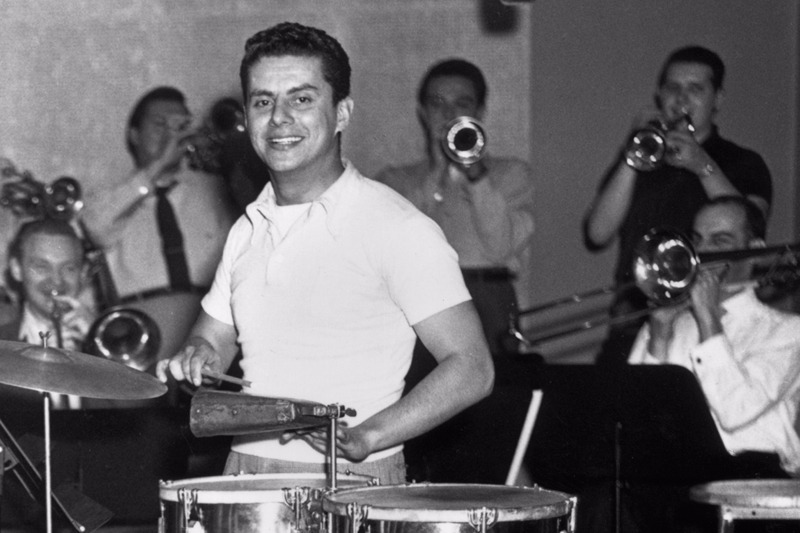
Born on April 20, 1923, in New York City, Tito Puente, donned the "King of Latin Jazz," was a pioneering force in Latin music, known for fusing styles and putting a big-band spin on traditional Latin music.
The son of Puerto Rican immigrants, Puente grew up in New York City's Spanish Harlem and had originally intended to become a dancer but those ambitions were scotched by a torn ankle tendon suffered in an accident. He learned to play a number of instruments as a child, beginning with the piano and then moving to percussion, saxophone, vibraphone and timbales (paired high-pitched drums). By age 13, he began working in Ramon Olivero's big band as a drummer, and later he studied composing, orchestration, and piano at Juilliard and the the New York School of Music. More importantly, he played with and absorbed the influence of Machito, who was successfully fusing Latin rhythms with progressive jazz.
In 1948, Puente formed a band that would become known as the Tito Puente Orchestra and a decade later, he released his best-selling album, Dance Mania (1958). Puente later added other Latin and Afro-Cuban rhythms to his repertoire, including cha-cha, merengue, bossa nova and salsa, and his continuous experimentation and creativity earned him a reputation as a musical pioneer. Puente also helped popularize the cha-cha during the 1950s, and he was the only non-Cuban who was invited to a government-sponsored "50 Years of Cuban Music" celebration in Cuba in 1952.
Fans enjoyed the way Puente put a big band spin on traditional Latin dances, mixing Latin sounds with jazz and other genres and throughout his career, Puente performed with a number of leading jazz performers, including George Shearing and Woody Herman, as well as with many stars of Latin music including Mongo Santamaria, Willie Bobo, Johnny Pacheco, and Ray Barretto. In later years, he performed with many symphony orchestras.
By the end of his decades-long career, Tito Puente, sometimes called the "King of Latin Jazz" or simply "El Rey" ("The King"), had made an indelible mark on the popular culture. In addition to making more than 100 albums and creating more than 200 compositions, Puente had become a highly revered musician, regarded as a musical legend in Latin music and jazz circles.
Tito Puente died on May 31, 2000, at the age of 77, in a New York City hospital where he was awaiting heart surgery. Adored by fans across the globe, several supporters waited in line for days to say goodbye to the popular bandleader. He was survived by wife Margaret Acencio, his partner for 30 years; their two children, Tito Jr., a musician, and Audrey, a newscaster; and a son named Richard, also a musician, from his earlier relationship to Ida Carlini.

peermusic websites use cookies. By using our services, you're agreeing to our Privacy and Cookie Policies.