Broken Social Scene's Brendan Canning on 20 Years of You Forgot It in People and the Gratitude of Connection
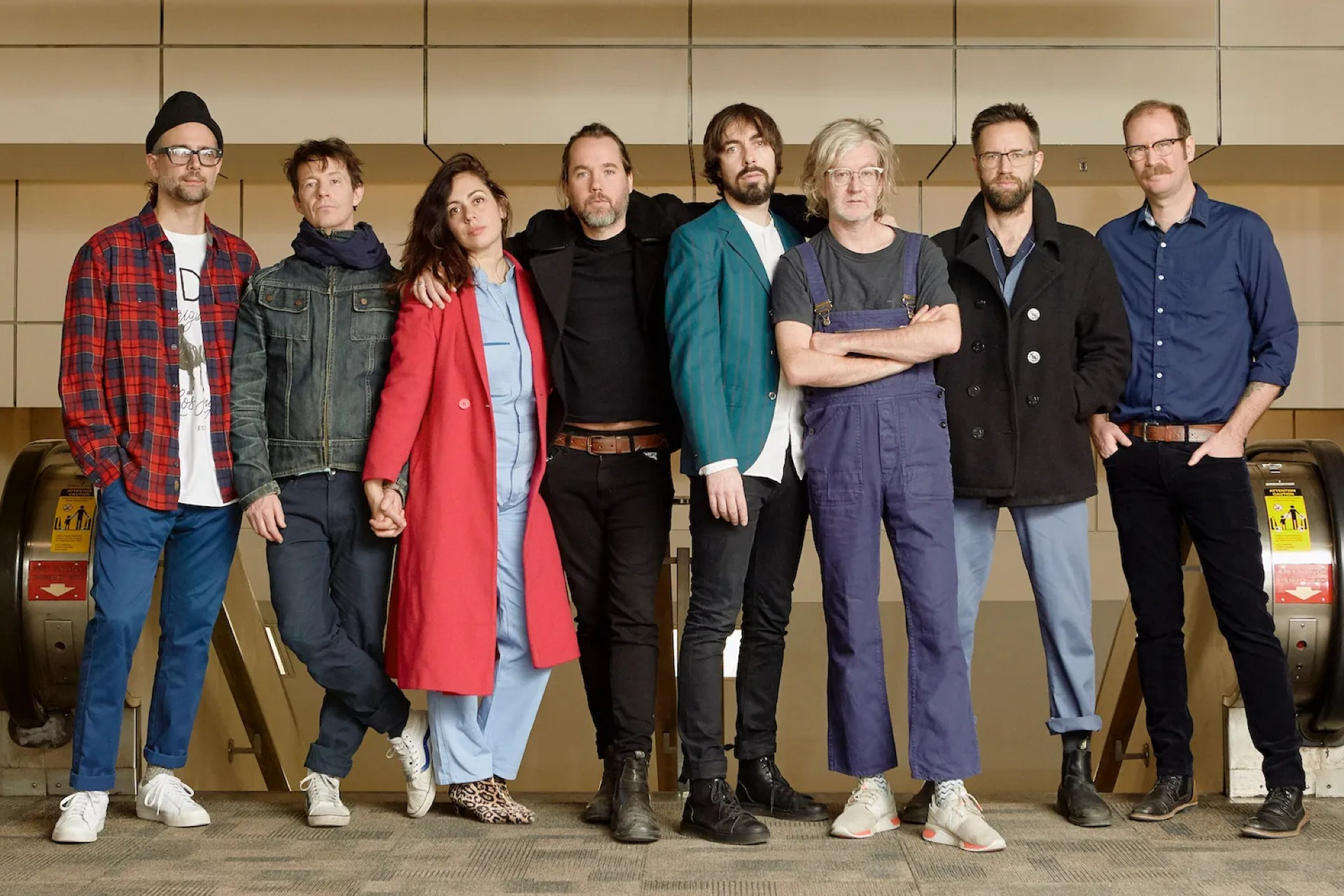
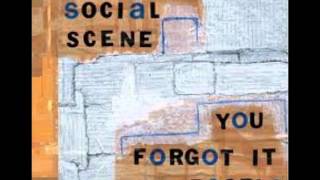
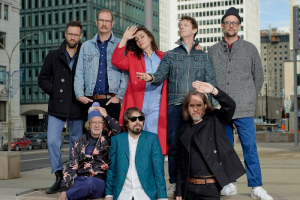
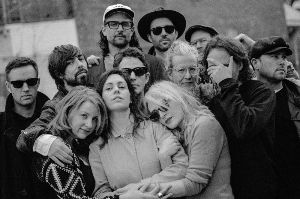
Ask any devotee what they love about Broken Social Scene, and it’s almost certain they’ll bring up the band’s capacity for connection. It’s baked into the core of the group, with Kevin Drew and Brendan Canning as its main songwriters, and Andrew Whiteman, Charles Spearin and Justin Peroff as the other consistent core members, while Metric’s Emily Haines and James Shaw, Leslie Feist, Stars’ Amy Millan and Evan Cranley, Sam Goldberg, and many more have come together in endless permutations over the years. And even as their breakthrough record You Forgot It In People celebrates its 20th anniversary this weekend, the earnest sincerity of the Toronto-based supergroup still resonates in listeners, transforming the band’s live shows into something akin to a communal balm for everyone involved.
Fittingly, as the album that put Broken Social Scene on the map turns 20, the band are celebrating with an anniversary tour that also marks their first time touring since the start of the COVID-19 pandemic. When we caught up with Canning—often the band’s guitarist/bassist, as well as occasional singer—by phone in the midst of this tour, the chat was just as affable and lively as the group are onstage. As Canning talked over margaritas about the current touring crew (emphasizing the importance of a good tour bus driver) and his experiences in various cities (such as biking through Chicago, where Forgiveness Rock Record was recorded), the conversation often came back to his overwhelming gratitude at getting to look back on this pivotal record and celebrate through performance. “Getting to relive all that,” he says, “is a win-win.”
Below, condensed and edited for clarity, read Paste’s chat with Canning about the stories behind You Forgot It In People, and what the album means to him and others 20 years later.
Paste: At the show I saw you guys on this tour, Kevin started the set by saying that You Forgot It In People’s title is “more relevant now than it was back then.” What does the title mean for you now, 20 years later? Has its meaning evolved for you at all?
Brendan Canning: I don’t want to dwell too much on “What’s my philosophy on life?,” but as we slowly crawl out of a pandemic state of mind, it’s been a myriad of feelings. It’s been a very disconnecting kind of experience these past couple years. I was delivering Gatorade and sleeping bags—doing what I could in Toronto with my time off, because I’m a musician and I had no job. It’s a lot to contend with. You’re just contending with so much stuff. The question of “What have you forgot in people?” at this stage is too tough of a question to answer. The answer evolves in your brain. I’m just thankful that we’re out here and getting to play shows and talk to people who have enjoyed our music over the years. I’ve been granted another gift by getting to go on the road with my band.
Paste: In a lot of ways, the band’s ability to get to tour again lining up with You Forgot It In People’s 20th anniversary almost feels like an opportunity to reestablish what the band is all about, in that sense.
Canning: Yeah, we’ve always had a family ethos to the group, and it’s been a very positive tour for the band—more than a lot of tours in recent memory. It’s a slightly different lineup we’re going out with: a different drummer, a different lead female vocalist [Jill Harris]. There’s a certain freshness to that, but at the same time, we’re playing these songs we’ve been playing for 20 years now. But it feels good that people are coming out to the gig. We’re delighted by all that.
Paste: In the context of the overall arc of Broken Social Scene, this album was clearly a departure from your debut Feel Good Lost, but the footprints of that record’s ambient post-rock instrumentals can definitely still be felt in some of You Forgot It In People. How do you think Feel Good Lost primed you for this record?
Canning: Feel Good Lost was very much, firstly, Kevin and I getting to know one another. I initially wanted to do stuff with Kev because I heard the record him and Charlie [Spearin] did as KC Accidental. One night, I said to my friend, “Maybe I’ll make this kid a star.” [Kevin] always liked that story. [laughs]
We eased into it—8-track quarter-inch tape, very innocent. I didn’t have a knowledge of all the bands Kevin loved—I never really listened to Papa M or Modest Mouse; I only had a partial interest in bands like that. I was a little more into house music at that point. But we came together with bands like Dinosaur Jr., Pavement, and Boards of Canada. So Feel Good Lost was kind of a little bit of a blueprint—not a full blueprint, because it became such a greater thing when you added in different songwriters, whether Leslie [Feist] or Emily [Haines] or Andrew [Whiteman] or Charlie. All of a sudden, you’re drawing on all these different songwriters, which was a really fortunate position to be in. So Feel Good Lost is like your intro record. People still like it, I’m still proud of it. I don’t go back home and listen to it all the time. But I still like it.
Videos
Related
peermusic websites use cookies. By using our services, you're agreeing to our Privacy and Cookie Policies.